Primary (3 Years Through Kindergarten), 3 years old as of September 1st of the Academic year they are joining.
What the Primary years look like at our West Chester school.
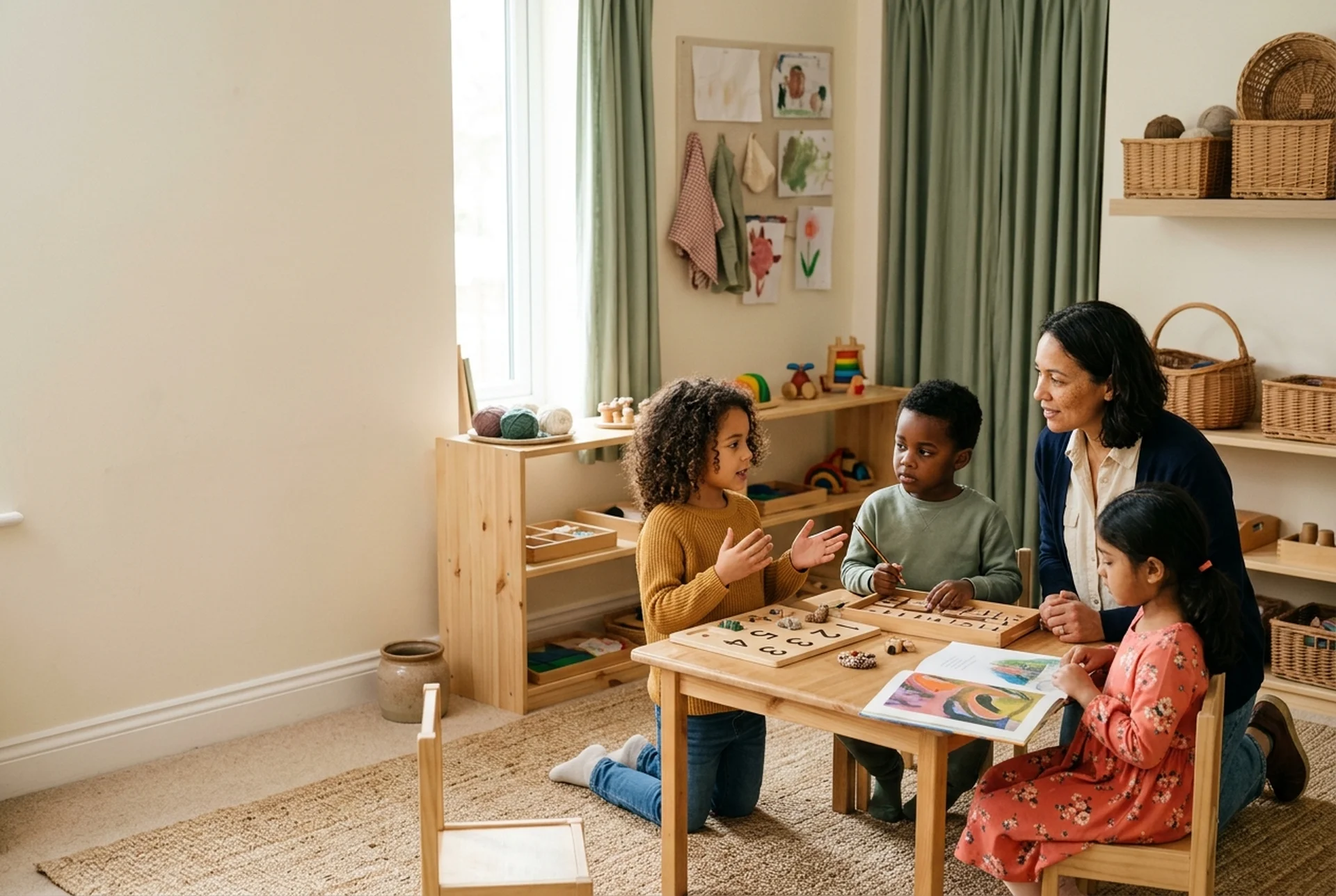
The Primary (3 Years Through Kindergarten) room
The Primary room is set up so children can move and choose. Materials sit on low shelves, arranged by area. A child may work on a puzzle, sort objects, or trace letters. Each activity is designed to be done and then put back. This builds focus and order.
The day is unhurried. Children work alone or in small groups. Teachers watch and guide when needed. A child might practice pouring, build with blocks, or learn the names of countries. Lessons are short and hands-on. The goal is independence, not speed.
By the end of the year, children gain confidence in their own abilities. They learn to care for the room and each other. They listen, speak, and solve small problems. These are the skills that carry into kindergarten and beyond. To enroll, children must be 3 years old by September 1st and fully toilet-trained.
What to expect
Primary (3 Years Through Kindergarten)
In our Primary classroom, we foster the process of self-creation by providing an environment in which each child can develop independently at his or her own pace while still gaining those social, physical, intellectual and emotional skills needed to develop to his/her full potential. Our environment is designed to provide the child the opportunity to interact with as many aspects of the world as possible (at their own level).
Have Questions?
If you have questions about the Primary program, you can send us a message. We will get back to you. You can also call the school to schedule a visit. Online registration is available and is first come, first served. For questions about your child's specific needs, please contact us directly.
What this looks like in practice
A Primary day moves at a child's pace. Children choose work from open shelves: polishing, sorting, counting beads, or tracing sandpaper letters. Teachers give short lessons, then step back. A child might spend twenty minutes on one task, then watch a friend. The room stays calm and ordered. Outside time, snack, and group gatherings break the morning. Parents can expect to see concentration, repetition, and growing independence.
The practical benefit shows up at home. A child who pours water at school may pour juice without spilling. One who sorts objects may put away toys by category. Children learn to wait, to ask, and to fix mistakes. They carry that focus into kindergarten. The confidence from doing things themselves lasts longer than any worksheet.